

Talent mobility: unlocking prosperity in the Mediterranean?
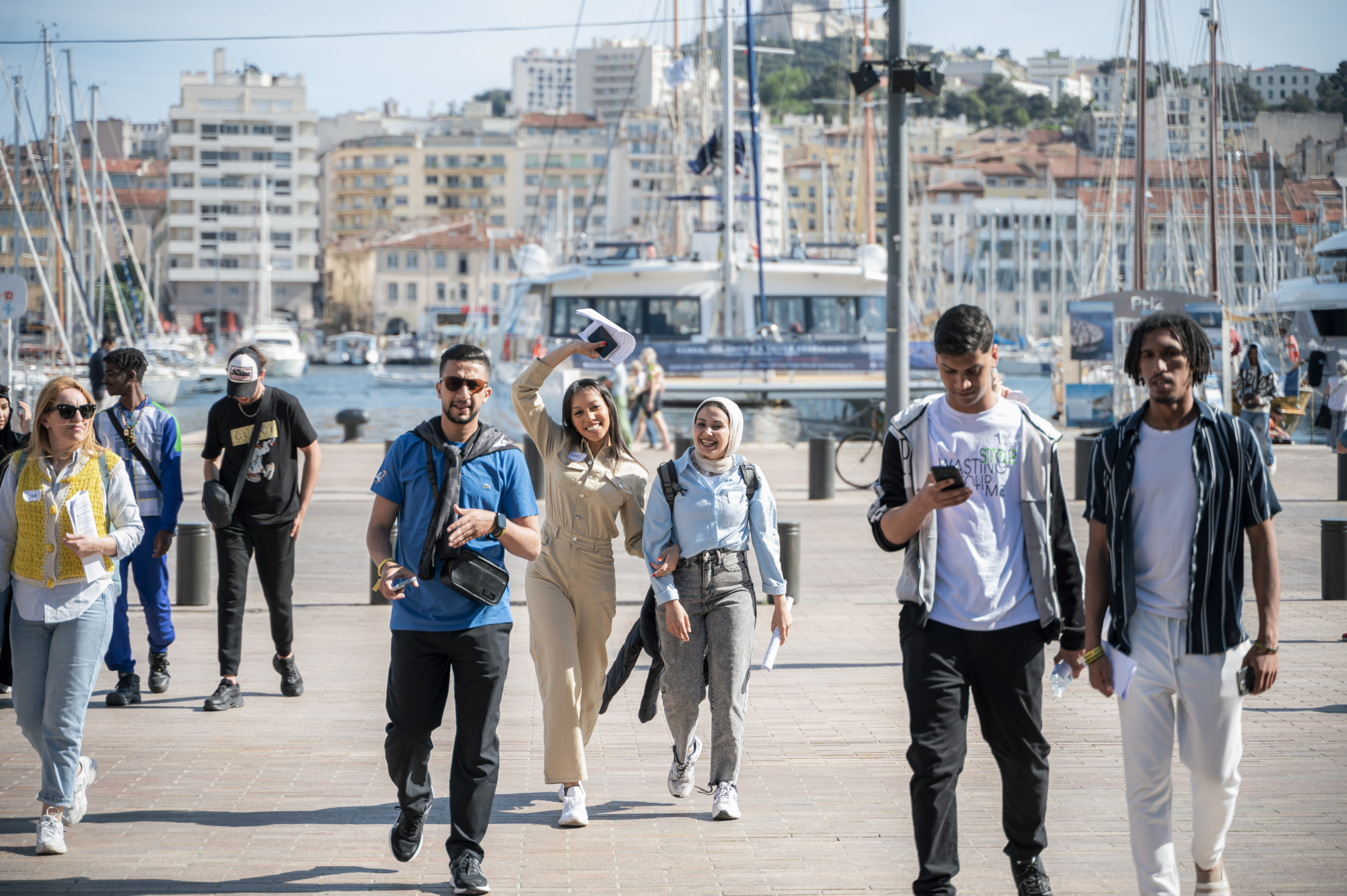
The Mediterranean does not lack talent. It lacks bridges.
More than one in two people are under the age of 30 in the Middle East and North Africa. This represents an extraordinary pool of energy, skills and ambition, at a time when several countries around the Mediterranean are facing ageing populations and labour shortages in key sectors.
Indeed, companies on both shores of the Mediterranean are struggling to recruit in healthcare, construction, energy, hospitality, logistics and services. Yet nearly one in three young people remains unemployed.
This paradox challenges us to rethink our ability to better connect young people’s skills with the needs of Mediterranean economies.
What if the real challenge was ultimately not a lack of opportunities or talent, but our collective ability to build bridges between the two?
Reducing mobility to a migration issue alone would be a mistake. It is also a matter of economic development, training and regional cooperation. When it is prepared, chosen and secured, mobility can address both young people’s aspirations and businesses’ needs.
The aim is neither to encourage departures at all costs, nor to view migration as a problem to be contained. The challenge is to enable young people to make informed choices through secure, supported and skills-based pathways that respond to their aspirations while contributing to the development of Mediterranean economies.
It is precisely this conviction that shaped the discussions organised by the Institut du monde arabe and the French Development Agency (AFD): how can talent mobility become a driver of shared prosperity for the Mediterranean?
On this occasion, Astrid Desjobert, IECD’s Director of Partnerships and Communications, shared the experience of our organisation, which supports more than 40,000 people every year towards training and employment. With nearly forty years of experience in the Mediterranean, IECD now develops more than 45 training pathways in high-demand sectors in Egypt, France, Lebanon, Morocco, Syria and Tunisia, while coordinating the Mediterranean New Chance network, which is also active in Spain, Italy, Jordan and Portugal.
A generation ready to build its future
Across countries, we often observe the same ambition: young people want to work, gain independence and build their future. This reality invites us to move beyond certain stereotypes. Early school leaving, for example, is not always a sign of disengagement from education. It often results from a combination of factors: a gap between young people’s aspirations and the pathways available to them, difficulties related to career guidance, mobility or access to education, economic and family constraints, or a disconnect between the expectations conveyed on social media and the training and employment opportunities available locally.
This generation is open to the world. Young people compare opportunities, develop international aspirations and wish to gain professional experience beyond their own territory. In several IECD programmes, up to 90% of young people express a desire to experience mobility, whether at national, regional or international level.
At the same time, companies continue to seek profiles that they struggle to recruit. The challenge is therefore not a lack of talent, but the difficulty of connecting available skills with the current and future needs of Mediterranean economies.
Mobility begins in everyday life
Mobility does not begin at the border.
For many young people, stepping through the door of a training centre already represents a first form of mobility. Leaving their town or region to attend training is often a decisive first step towards greater independence. Completing an internship in a company, discovering a new professional environment or moving to another region are all challenges that gradually build self-confidence, strengthen adaptability and foster autonomy.
Our experience is clear: successful mobility is progressive.
It is built through quality career guidance, strong technical skills, learning professional codes and workplace realities, acquiring language skills, understanding legal and administrative frameworks, and becoming aware of the benefits of legal mobility compared with irregular pathways.
This is the approach IECD implements with all its partners: turning each experience into a step towards personal and professional development rather than simply a geographical move. This preparation is all the more essential for young people furthest from employment, whose skills too often remain invisible.
Training with businesses to meet real needs
Talent mobility is not only a matter of employment inclusion or migration policies. It is also a competitiveness issue for Mediterranean businesses.
Working with employers, anticipating skills needs and facilitating the recognition of qualifications are now strategic levers for addressing recruitment challenges, supporting economic transitions and strengthening the attractiveness of territories.
IECD designs its training programmes with more than 200 companies to meet the concrete needs of high-demand sectors. Healthcare, construction, energy, logistics and hospitality: needs are numerous and often shared across countries.
The healthcare sector is a clear example. Faced with ageing populations and a growing shortage of healthcare professionals in several Mediterranean countries, IECD has developed training programmes now deployed in Syria, Lebanon, Egypt, Tunisia, Morocco and France. More than 5,000 young people have already been trained, supported by the circular mobility of trainers and experts.
The key lies in our ability to anticipate changes in professions and build common solutions with businesses, public authorities and local stakeholders. This is the condition for mobility to become a genuine driver of shared development for the Mediterranean.
Recognising skills to open up new opportunities
Training alone is not enough. Skills must also be recognised.
Many young people have acquired know-how through non-formal learning pathways or in another country. Without recognition of these achievements, their professional mobility remains limited and companies struggle to identify the skills they need.
This is why IECD contributes to the European Union’s work under the framework of the Pact for the Mediterranean and the Med Skills Tracker project, which aims to make skills more transparent, comparable and recognised across countries.
The objective is clear: facilitate recruitment, secure career pathways and strengthen the competitiveness of Mediterranean economies.
Building a Mediterranean skills space
The discussions organised at the Institut du monde arabe confirmed a strong conviction: the Mediterranean does not lack talent. Talent is already there. The challenge is to better reveal it, create bridges and establish the conditions for its circulation for the benefit of all.
Nearly forty years of IECD’s commitment demonstrate that it is possible to build these bridges at a regional level.
Because skills challenges transcend national borders, we are convinced that their solutions must necessarily be collective. States, businesses, training organisations, donors, civil society organisations and international partners all have a role to play in building mobility pathways that respond both to young people’s aspirations and to the needs of economies on both shores of the Mediterranean.
Businesses have a central role in this dynamic: it is with them that tomorrow’s skills are built, as closely as possible to labour market realities. IECD develops this partnership-based approach to make mobility a driver of employment, economic development and shared prosperity.
With this vision in mind, IECD continues its commitment and strengthens partnerships with all stakeholders working to make the Mediterranean a genuine space for skills, employment and shared opportunities.