
LOCATION
LOCAL PARTNERS
Koucha Académie
Association Patrimoine pour l’Économie solidaire (Apes)

Koucha Académie: artisanal excellence in the service of youth integration
Hospitality and catering careers offer major opportunities for professional integration and social inclusion, especially for young people with limited or no formal education.
In Tunisia, the artisanal bakery sector is undergoing a phase of restructuring, driven by a growing demand for high-quality products that meet increasingly important nutritional requirements. Yet, no dedicated professional training currently exists in the country, creating a significant gap between market needs and available skills.
It is in this context that IECD and its local partner, the Association Patrimoine pour l’Economie Solidaire (APES), have developed Koucha Académie, offering technical training that is accessible and tailored to the realities of the Tunisian market.
The programme primarily targets young people aged 15 to 29 who are in vulnerable situations, and aims to:
-
Train them in artisanal bakery and pastry professions through an intensive programme combining technical learning with professional immersion.
-
Develop their transversal and personal skills (soft skills), essential for promoting sustainable integration into the workforce.
-
Facilitate their access to employment through internships and partnerships with industry stakeholders.
-
Support them in building their career path, whether towards employment, further accredited training, or entrepreneurship.
The training programme runs over six months, including four months of intensive instruction (with a common core followed by a specialisation) and two months of work placement in a company. It is complemented by tailored individual support, including coaching, assistance with job searches, and post-training follow-up, in order to secure participants’ pathways into employment.
Beyond this training programme, Koucha Académie is part of a broader and more structured approach to strengthening the capacities of local stakeholders, in particular the APES association.
Indeed, the project aims to structure and sustain a training pathway, notably through equipping the training centre, adapting pedagogical content based on IECD’s international expertise, training trainers, and supporting 75 young people. This approach is based on a gradual transfer of skills, with the objective of ensuring full ownership of the programme by APES and mobilising additional funding to guarantee its continuity.
At the same time, support is provided to strengthen governance, as well as the structuring and development of the organisation; it also contributes to consolidating the association’s economic model and fostering synergies between its different activities.
Finally, particular attention is paid to advocacy efforts, to better recognise the role of non-profit organisations in employment integration and vocational training policies.
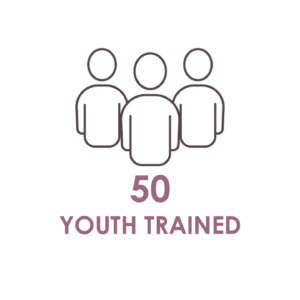
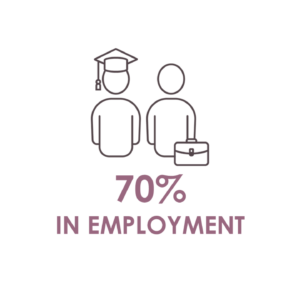
The results in 2025: