
• Link to Rss this site
  • Link to Facebook
  • Link to Youtube
  • Link to LinkedIn
  • Link to Mail
  • I SUBSCRIBE TO THE NEWSLETTER
  • Français Français French fr
  • English English English en
iecd
  • Who we are
    • Our commitment
    • About the IECD
    • IECD Teams
    • Documentation
  • Core actions
    • Education and guidance
    • Vocational training and professional integration
    • Entrepreneurship
  • Countries of operation
    • Sub-Saharan Africa
    • Mediterranean Basin
    • Indian Ocean
    • South-East Asia
    • France
  • Get involved
    • Consult our job offers
    • Become an expert
    • Become a partner
  • I WANT TO DONATE
  • I WANT TO SPONSOR
  • Contact us
  • Click to open the search input field Click to open the search input field Search
  • Menu Menu
  • AGRICULTURAL TRADES

    Training & professional integration

PROJECT LAUNCH

1992

LOCATION

Cameroon, Ivory Coast, Liberia, Democratic Republic of the Congo

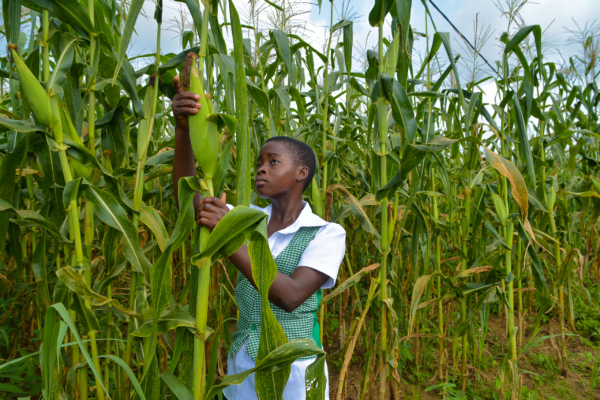
We are in the process of launching a mini-business at the center. My group has chosen to produce corn because this product is rare in the locality of the dry season. I’m happy because everyone in the group is involved in the work. At first, I thought it would be impossible, but after discussing it with my classmates, I understood that anything was possible by consulting my classmates. We are seven young people in the group, and I really think we will succeed.

DOROTHÉE

3rd year CAP  student at Dizangue center

Responsable Programme

Marie-Laetitia CATTA

Programme Manager

marie-laetitia.catta@iecd.org

Training young people in agriculture

The context in Africa


A young and rural population, with 45% of the population living in rural areas and 60% under the age of 25.

A buoyant agricultural sector, accounting for around 20% of GDP and the largest source of employment, with 50% of the working population employed in the sector.

A training offer that is far removed from the reality of the job market, with training courses that are disconnected from the reality of agricultural occupations and generally too theoretical. They are not conducive to the social and professional integration of young people, many of whom find themselves unemployed.

The vision of the program

To train today the farmers of tomorrow as key players in the agro-ecological transition and in economic development.

Train and integrate the youth through work-study programs


Our teams have put in place a training programme based on the alternating teaching method, enabling students to discover a subject in a practical way through work placements, and then to go into greater depth on what they have learnt during theoretical courses, educational workshops (hutches, hen houses and vegetable gardens), presentations by professionals and study visits. At the same time, the course teaches life skills and self-development (communication, critical thinking, resilience, confidence and respect) and raises young people’s awareness of gender issues.

What is a work-study cycle?


The alternation corresponds to a cycle of theoretical learning and practical application of a main technical theme. Each alternation lasts around 6-8 weeks.

  • Step 1

    Topic introduction

  • Step 2

    Practical internship.

  • Step 3

    Back at the center, sharing of the experience gained from the internship.

  • Step 4

    In-depth study through theoretical and practical courses.

Each year, the students cover 6 to 9 themes: market gardening, poultry farming, cocoa, rubber …

2024 results


820

young people trained

90%

are in employment or are continuing their studies

Partager
  • Share on Facebook
  • Share on X
  • Share on LinkedIn
  • Share by Mail
  • WHO WE ARE
  • Our commitment
  • About the IECD
  • IECD Teams
  • Documentation
  • WHO WE ARE
  • Our commitment
  • About the IECD
  • IECD Teams
  • Documentation
  • Countries of operation
  • Sub-Saharan Africa
  • Mediterranean Basin
  • Indian Ocean
  • South-East Asia
  • France
  • GET INVOLVED
  • Donation
  • Become an expert
  • Become a partner
Search Search

Copyright 2026 – Mentions légales – Politique de cookies – Nous contacter

Scroll to top Scroll to top Scroll to top
Gérer le consentement aux cookies
Pour offrir les meilleures expériences, nous utilisons des technologies telles que les cookies pour stocker et/ou accéder aux informations des appareils. Le fait de consentir à ces technologies nous permettra de traiter des données telles que le comportement de navigation ou les ID uniques sur ce site. Le fait de ne pas consentir ou de retirer son consentement peut avoir un effet négatif sur certaines caractéristiques et fonctions.
Fonctionnel Always active
Le stockage ou l’accès technique est strictement nécessaire dans la finalité d’intérêt légitime de permettre l’utilisation d’un service spécifique explicitement demandé par l’abonné ou l’utilisateur, ou dans le seul but d’effectuer la transmission d’une communication sur un réseau de communications électroniques.
Préférences
Le stockage ou l’accès technique est nécessaire dans la finalité d’intérêt légitime de stocker des préférences qui ne sont pas demandées par l’abonné ou l’utilisateur.
Statistiques
Le stockage ou l’accès technique qui est utilisé exclusivement à des fins statistiques. Le stockage ou l’accès technique qui est utilisé exclusivement dans des finalités statistiques anonymes. En l’absence d’une assignation à comparaître, d’une conformité volontaire de la part de votre fournisseur d’accès à internet ou d’enregistrements supplémentaires provenant d’une tierce partie, les informations stockées ou extraites à cette seule fin ne peuvent généralement pas être utilisées pour vous identifier.
Marketing
Le stockage ou l’accès technique est nécessaire pour créer des profils d’utilisateurs afin d’envoyer des publicités, ou pour suivre l’utilisateur sur un site web ou sur plusieurs sites web ayant des finalités marketing similaires.
  • Manage options
  • Manage services
  • Manage {vendor_count} vendors
  • Read more about these purposes
Voir les préférences
  • {title}
  • {title}
  • {title}