
• Link to Rss this site
  • Link to Facebook
  • Link to Youtube
  • Link to LinkedIn
  • Link to Mail
  • I SUBSCRIBE TO THE NEWSLETTER
  • Français Français French fr
  • English English English en
iecd
  • Who we are
    • Our commitment
    • About the IECD
    • IECD Teams
    • Documentation
  • Core actions
    • Education and guidance
    • Vocational training and professional integration
    • Entrepreneurship
  • Countries of operation
    • Sub-Saharan Africa
    • Mediterranean Basin
    • Indian Ocean
    • South-East Asia
    • France
  • Get involved
    • Consult our job offers
    • Become an expert
    • Become a partner
  • I WANT TO DONATE
  • I WANT TO SPONSOR
  • Contact us
  • Click to open the search input field Click to open the search input field Search
  • Menu Menu
  • Focus

    IECD lecture

One Health Summit: rethinking health across all life
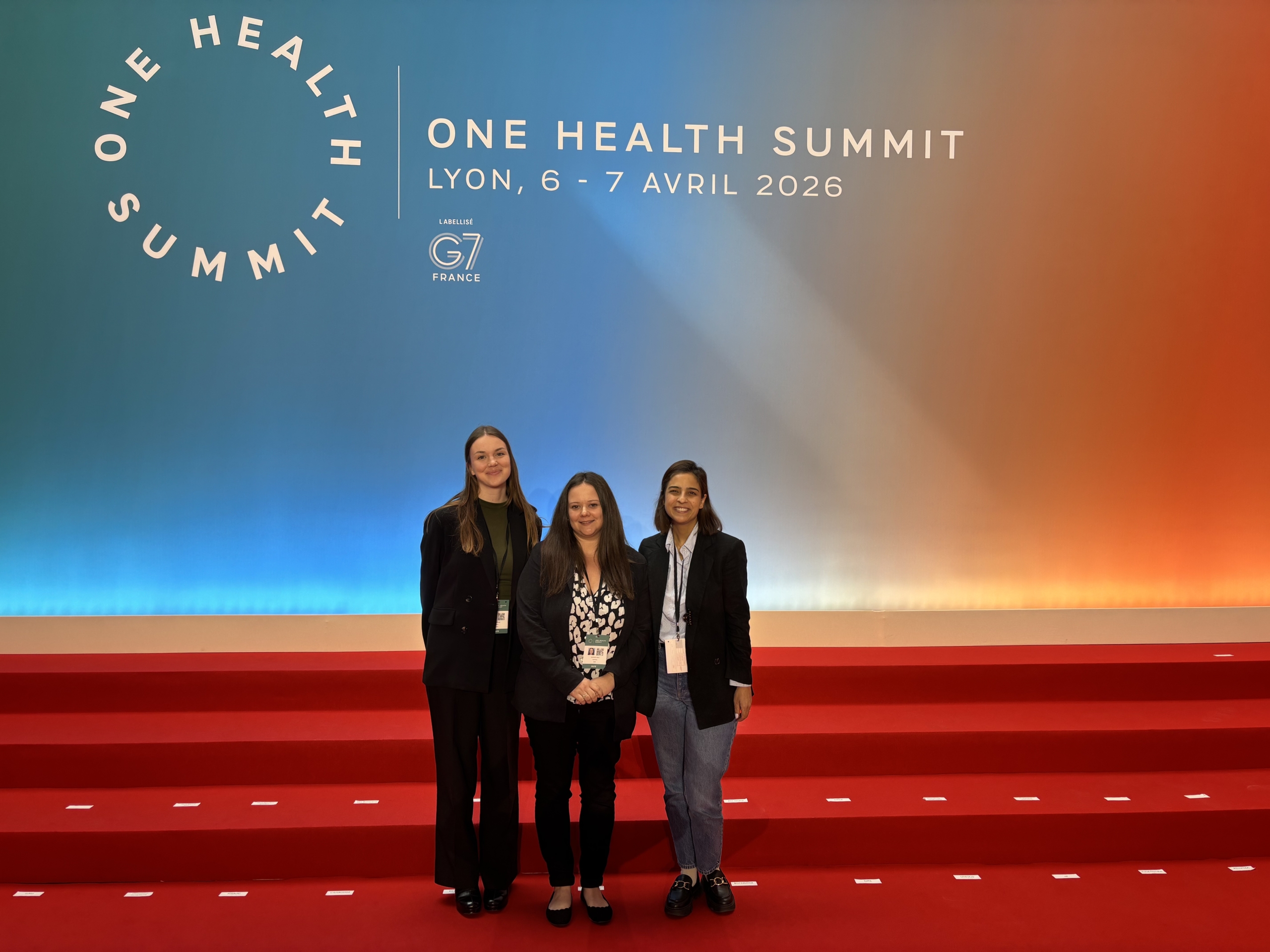
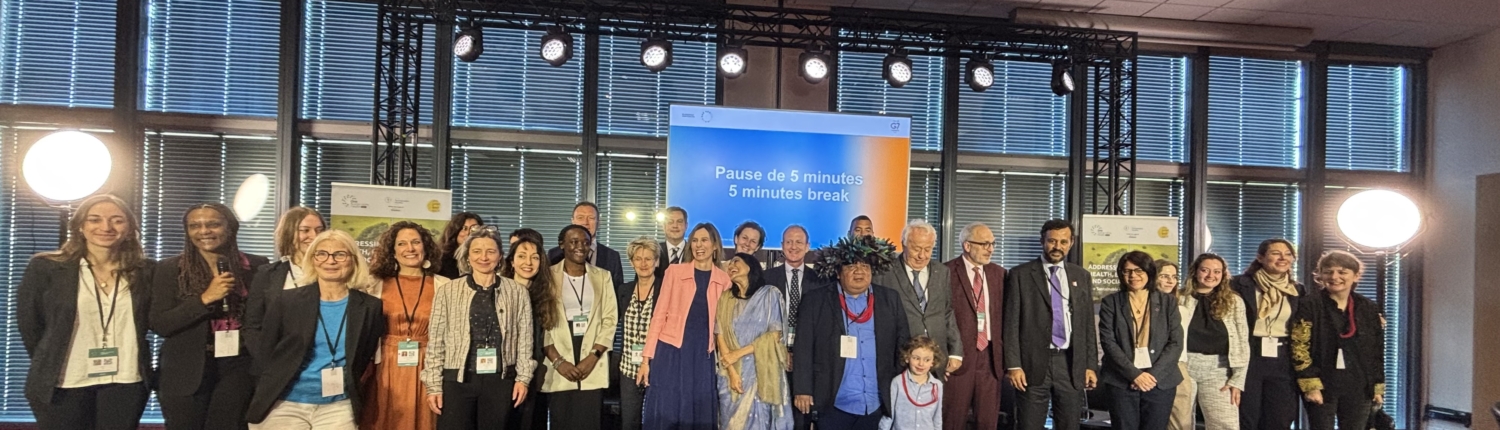
In the face of escalating health, environmental, and food crises, the One Health approach is emerging as an essential response. Gathered in Lyon on April 6 and 7, public and private stakeholders reaffirmed the urgent need for coordinated action based on prevention, international cooperation, and the breaking down of sectoral silos.

Global health: interconnected by nature 

Human health cannot be considered in isolation from the health of animals and ecosystems. Today, approximately 60% of emerging infectious diseases originate in animals, and 75% of emerging human diseases come from animals. Each year, around five new diseases appear, three of which are zoonotic in origin (Ebola, COVID-19). In a world where 811 million people go to bed hungry and over 20% of global livestock production losses are disease-related, the One Health approach seeks to anticipate and prevent crises by fostering collaboration across disciplines—medicine, veterinary health, agronomy, ecology—and across regions. 

From dialogue to action: transforming systems

The One Health Summit highlighted several levers to sustainably evolve health systems: strengthening international cooperation, rethinking institutional frameworks, engaging public and private actors, and developing more effective surveillance mechanisms. Since 2003, diseases and pandemics have caused over 15 million deaths and economic losses of USD 4 trillion. The challenge is clear: shift from a reactive to a preventive approach, leveraging science, innovation, and enhanced coordination across all levels of intervention.

IECD: Training to Prevent and Act Locally

While the One Health Summit underscored the need for a global and coordinated response, such an approach cannot succeed without health professionals trained to think and act in an integrated way. Through its initial and continuing education programs, IECD works to build more resilient health systems by placing prevention, community proximity, and a holistic approach to patient care at the heart of its competency frameworks. Training a health professional to detect a zoonosis early in their region, raise community awareness of the risks associated with human-animal-environment interactions, and efficiently connect with existing surveillance systems is a concrete way to translate the ambitions of the Lyon Summit at the local level. In this sense, strengthening the capacities of frontline health personnel is not just a development goal—it is an essential link in global health security.

Partager
  • Share on Facebook
  • Share on X
  • Share on LinkedIn
  • Share by Mail
  • WHO WE ARE
  • Our commitment
  • About the IECD
  • IECD Teams
  • Documentation
  • WHO WE ARE
  • Our commitment
  • About the IECD
  • IECD Teams
  • Documentation
  • Countries of operation
  • Sub-Saharan Africa
  • Mediterranean Basin
  • Indian Ocean
  • South-East Asia
  • France
  • GET INVOLVED
  • Donation
  • Become an expert
  • Become a partner
Search Search

Copyright 2026 – Mentions légales – Politique de cookies – Nous contacter

Scroll to top Scroll to top Scroll to top
Gérer le consentement aux cookies
Pour offrir les meilleures expériences, nous utilisons des technologies telles que les cookies pour stocker et/ou accéder aux informations des appareils. Le fait de consentir à ces technologies nous permettra de traiter des données telles que le comportement de navigation ou les ID uniques sur ce site. Le fait de ne pas consentir ou de retirer son consentement peut avoir un effet négatif sur certaines caractéristiques et fonctions.
Fonctionnel Always active
Le stockage ou l’accès technique est strictement nécessaire dans la finalité d’intérêt légitime de permettre l’utilisation d’un service spécifique explicitement demandé par l’abonné ou l’utilisateur, ou dans le seul but d’effectuer la transmission d’une communication sur un réseau de communications électroniques.
Préférences
Le stockage ou l’accès technique est nécessaire dans la finalité d’intérêt légitime de stocker des préférences qui ne sont pas demandées par l’abonné ou l’utilisateur.
Statistiques
Le stockage ou l’accès technique qui est utilisé exclusivement à des fins statistiques. Le stockage ou l’accès technique qui est utilisé exclusivement dans des finalités statistiques anonymes. En l’absence d’une assignation à comparaître, d’une conformité volontaire de la part de votre fournisseur d’accès à internet ou d’enregistrements supplémentaires provenant d’une tierce partie, les informations stockées ou extraites à cette seule fin ne peuvent généralement pas être utilisées pour vous identifier.
Marketing
Le stockage ou l’accès technique est nécessaire pour créer des profils d’utilisateurs afin d’envoyer des publicités, ou pour suivre l’utilisateur sur un site web ou sur plusieurs sites web ayant des finalités marketing similaires.
  • Manage options
  • Manage services
  • Manage {vendor_count} vendors
  • Read more about these purposes
Voir les préférences
  • {title}
  • {title}
  • {title}